Corn plants are sometimes called false palms because of the thick canes germinating from its buds. Watch this video for more plant care info.

Showing posts with label indoor plants. Show all posts
Showing posts with label indoor plants. Show all posts
Monday, July 8, 2013
Friday, May 11, 2012
Topiaries Carve a Place Indoors and Out
Let's look at some examples of topiary plants and how you can use them around your house...
Article taken off houzz.com
Topiaries Carve a Place Indoors and Out
In a garden, by a sink or decorating a living room, topiaries add a sculptural, artful touch
Topiary gardens can take years to grow and perfect (they're not for the faint of heart). For those who are committed to maintaining a formal topiary garden, however, the results can be magnificent.
Join me as I take a look at a few inspirational topiary designs, from the smallest sinkside rosemary to a grand showcase garden in Pennsylvania.

Topiary is the art of shaping plants into recognizable forms by pruning. In outdoor gardens, spherical shapes create a fanciful look. A collection of shaped evergreens gives a Dr. Seuss–like appeal to this space.
 The classic miniature standards seen here look like small trees, each with a singular trunk and round pom-pom top. Woody herbs such as lavender and rosemary make ideal candidates for sinkside or countertop miniature standards.
 Extend the standard topiary to create three balls of foliage, and you have another traditional form. This topiary brings a little green to a music room.
 Topiaries aren't just for traditional spaces. Try two matching trees, shaped as standards, in a modern space. Use this technique on a lemon or lime tree for a topiary that's both beautiful and edible.
 Another classic topiary form is the spiral. Choose a plant that has already been shaped or select your own upright evergreen. An arborvitae is a good choice for this type of creation.
 Short on space? Try the spiral look in a miniature. Kept in a small pot, a topiary will stay diminutive in size.
 For more inspiration, I traveled to Longwood Gardens in Kennett Square, Pennsylvania. The gardens have a magnificent display of old, wizened topiary forms mixed with whimsical additions in charming shapes.
 This terraced, spherical pyramid shape is repeated often throughout the space.
 Shapes like these must be trimmed several times a year. The gaps between the layers quickly disappear when they aren't tended regularly.
 Some of the topiary towers are topped by birds that look ready to lift off.
 If you peek inside the various topiary structures, you'll see that they often get support in their old age. The unnatural forms can put a lot of weight on the branches of the evergreens, so staking is necessary.
 It's not all seriousness in the topiary garden. This charming duck sits front and center.
 Inspired to try out a topiary form of your own? Perhaps you would like to start with a simple, modern hedge and a few pom-poms.
 Or maybe you want to go with a looser arrangement to spice up the dining room.

Whichever style you choose, remember that topiary is an art form that takes dedication and time. You will be shaping your plant for years, and the upkeep is continual. If you have the time and inclination, though, a topiary garden can be a beautiful thing to behold.
Article taken off houzz.com
Topiaries Carve a Place Indoors and Out
In a garden, by a sink or decorating a living room, topiaries add a sculptural, artful touch
Topiary gardens can take years to grow and perfect (they're not for the faint of heart). For those who are committed to maintaining a formal topiary garden, however, the results can be magnificent.
Join me as I take a look at a few inspirational topiary designs, from the smallest sinkside rosemary to a grand showcase garden in Pennsylvania.

Topiary is the art of shaping plants into recognizable forms by pruning. In outdoor gardens, spherical shapes create a fanciful look. A collection of shaped evergreens gives a Dr. Seuss–like appeal to this space.


Whichever style you choose, remember that topiary is an art form that takes dedication and time. You will be shaping your plant for years, and the upkeep is continual. If you have the time and inclination, though, a topiary garden can be a beautiful thing to behold.


Friday, April 20, 2012
Indoor Gardener: Orchids Bring Beauty to Decor
Chinese Symbol for many children, thoughtful, maturity & charm...
Article taken off houzz.com
Indoor Gardener: Orchids Bring Beauty to Decor
Orchids were once much less commonplace than they are today and were considered a true luxury. In fact, in Victorian times, the term "orchidelirium" was coined to describe the frenzy of orchid collectors. Today, you can pick up an orchid at Home Depot or Ikea — hardly exotic. However, this doesn't make these unusual flowering plants any less beautiful.
There are thousands of species and hybrids of orchids. Whether you are a collector of rare specimens or a purchaser of a basic phalaenopsis from the home improvement store, an orchid is a wonderful addition to any room. However, orchids can require delicate care: They prefer bright sunlight and high humidity (which you can provide through daily misting). Orchids also go through a long period of dormancy (not flowering) after their blossoms have faded.
Here is a collection of handsome rooms that all feature orchids; take your inspiration from these spectacular specimens.
 Lisa Borgnes Giramonti's blog is full of traditional charm. Here she mixes an orchid with stacks of coffee-table books on a glass table.
 An orchid makes a major impact when reflected in a nearby mirror. Tiffany Eastman Interiors uses both a hanging mirror and a mirrored console to showcase this beautiful bloomer.
 A blossoming potted orchid will last much longer than a cut bouquet. Here two orchids are planted in a pair of matching pots for an elegant centerpiece.
 This yellow-blossomed orchid is a cheerful centerpiece in a dining room by Elizabeth Dinkel. Natural hits of bright color are an easy way to perk up an otherwise neutral room.
 In this corner, a pair of orchids are planted in a vintage trophy. It's a
surprising yet classic way to display a beautiful houseplant.
In this corner, a pair of orchids are planted in a vintage trophy. It's a
surprising yet classic way to display a beautiful houseplant.
 A white-blossomed example mixes with exotic wall hangings in the Dallas home of Jamie Laubhan-Oliver.
 A modern bathroom gets a touch of life from this elegant orchid. Some
orchids grow well and bloom under fluorescent lights — a plus for
windowless baths.
A modern bathroom gets a touch of life from this elegant orchid. Some
orchids grow well and bloom under fluorescent lights — a plus for
windowless baths.
 Decorator Niki Papdopoulos knows that orchids like a humid spot like the
bathroom. A silver-colored cache pot gives this specimen a glamorous
air.
Decorator Niki Papdopoulos knows that orchids like a humid spot like the
bathroom. A silver-colored cache pot gives this specimen a glamorous
air.
 Here an orchid is part of a Zen-like grouping of objects. This small
orchid has been planted in an unusual glass vessel that appears to be
filled with sand.
Here an orchid is part of a Zen-like grouping of objects. This small
orchid has been planted in an unusual glass vessel that appears to be
filled with sand.
 A silver Paul Revere bowl is an unusual planter for this fuchsia orchid.
For a vessel with no drainage holes like this, place a layer of rocks
at the bottom of the pot.
A silver Paul Revere bowl is an unusual planter for this fuchsia orchid.
For a vessel with no drainage holes like this, place a layer of rocks
at the bottom of the pot.
Article taken off houzz.com
Indoor Gardener: Orchids Bring Beauty to Decor
Orchids were once much less commonplace than they are today and were considered a true luxury. In fact, in Victorian times, the term "orchidelirium" was coined to describe the frenzy of orchid collectors. Today, you can pick up an orchid at Home Depot or Ikea — hardly exotic. However, this doesn't make these unusual flowering plants any less beautiful.
There are thousands of species and hybrids of orchids. Whether you are a collector of rare specimens or a purchaser of a basic phalaenopsis from the home improvement store, an orchid is a wonderful addition to any room. However, orchids can require delicate care: They prefer bright sunlight and high humidity (which you can provide through daily misting). Orchids also go through a long period of dormancy (not flowering) after their blossoms have faded.
Here is a collection of handsome rooms that all feature orchids; take your inspiration from these spectacular specimens.


 A blossoming potted orchid will last much longer than a cut bouquet. Here two orchids are planted in a pair of matching pots for an elegant centerpiece.


 Here an orchid is part of a Zen-like grouping of objects. This small
orchid has been planted in an unusual glass vessel that appears to be
filled with sand.
Here an orchid is part of a Zen-like grouping of objects. This small
orchid has been planted in an unusual glass vessel that appears to be
filled with sand.
Friday, February 24, 2012
The 25 Best Indoor Plants
Bring
the outdoors in with 25 of the best plants for the indoors.
 |
| Image by iVillage |
Experts
agree that in raising plants indoors, the golden rule should be to
replicate the plants’ natural habitat as much as possible. The
environment is just part of the equation though. The characteristics
of the plant should also be considered.
 |
| Image by iVillage |
African
Violets
African
violets need constant sunshine so place it next to a window that
faces south. During winter, set the temperature at around 15.6
degrees Celsius to ensure that the violets continue to bloom. Be
careful not to over-water the plant. Pour out water directly into the
roots when the surface is dry.
 |
| Image by iVillage |
Aloe
Vera
Caring
for aloe vera means watering only when necessary. During summer, it
can be placed outdoors without intervention. An indication of good
health for the aloe vera is the presence of thick, spot-free leaves.
 |
| Image by iVillage |
Amazon
Elephant Ear
As
a tropical plant, the main consideration for the Amazon elephant's
ear is the temperature. Keep it at around 18 to 21 degrees Celsius.
It should be placed in a bright room with no direct sunlight.
Mist
the leaves to recreate the humidity in the jungle and water if the
soil is dry. If the leaves start turning brown, then it could be a
sign that the plant is over-watered.
 |
| Image by iVillage |
Avocadoes
The
avocado plant is more forgiving when it comes to temperatures. While
it is still germinating, keep the temperature at around 18 degrees
Celsius. Once the leaves start to appear, normal temperatures will
suffice.
Trim
the leaves that appear below the top leaves to ensure that the
avocado plant grows upwards.
 |
| Image by iVillage |
Boston
Fern
To properly raise a Boston fern, place it in a location that has access to indirect sunlight. Give it plenty of water, enough so that the soil is always moist. Mist the leaves frequently.
To properly raise a Boston fern, place it in a location that has access to indirect sunlight. Give it plenty of water, enough so that the soil is always moist. Mist the leaves frequently.
 |
| Image by iVillage |
Bromeliads
Expect
these plants to flower annually, if the circumstances are right.
Fortunately, bromeliads are fond of artificial light so access to
sunlight is not a problem.
As
for water, it is important for bromeliads to have good drainage. A
good trick to remember to keep from over-watering the plant is to
think of it as rainfall. Water about twice in a month.
 |
| Image by iVillage |
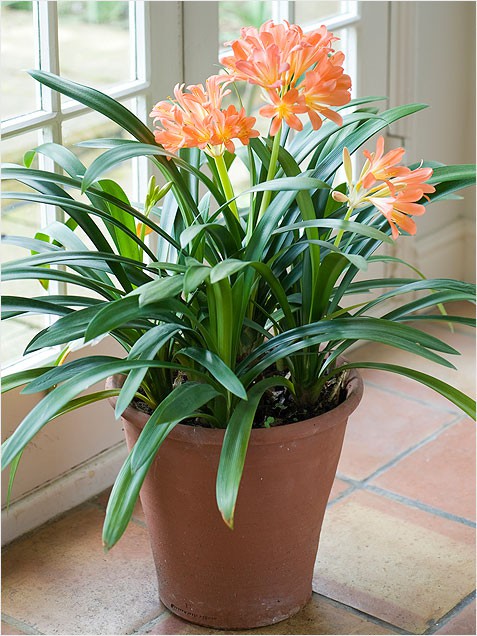
Clivia
Miniata
The
Clivia miniata is a cool-temperature plant, which thrives on
temperatures of about 4.5 to 10 degrees Celsius. Water the plant
moderately. It should receive less water during the winter period.
An
important thing to consider about the Clivia miniata is that its root
system should be kept tight so repot only when the pot cracks.
 |
| Image by iVillage |
Crown
of Thorns
Crown of thorns is a plant that should be placed in bright, indirect sunlight. The roots should be well-watered, but the soil should be allowed to dry out before introducing further watering. Should enough water and sunlight be available, small red flowers should be in bloom throughout the year.
Crown of thorns is a plant that should be placed in bright, indirect sunlight. The roots should be well-watered, but the soil should be allowed to dry out before introducing further watering. Should enough water and sunlight be available, small red flowers should be in bloom throughout the year.
 |
| Image by iVillage |
Cyclamen
This
plant likes a good chill, often thriving in unseated parts of the
house. Also, keep it away from direct sunlight and make sure that the
soil is always moist.
 |
| Image by iVillage |
Ice
Cascade
The ice cascade, or the cymbidium Sarah Jean, is a type of orchid that prefers extreme environments: give it a lot of sunlight, up to 15 hours a day. In the evening, place it in a cold location.
The ice cascade, or the cymbidium Sarah Jean, is a type of orchid that prefers extreme environments: give it a lot of sunlight, up to 15 hours a day. In the evening, place it in a cold location.
When winter hits, mist the leaves occasionally to provide the plant with sufficient moisture.
 |
| Image by iVillage |
Cactus
Keep cacti near a sunny window, mist it on occasion and it should thrive. A cactus plant should only be watered when the soil is bone dry.
Keep cacti near a sunny window, mist it on occasion and it should thrive. A cactus plant should only be watered when the soil is bone dry.
 |
| Image by iVillage |
Indoor
Boxwood
Give the boxwood direct exposure to sunlight, such as near a full glass window. Aside from giving the plant enough sunshine, keep the soil moist longer by adding mulch to the top of the soil. Water the boxwood about once a week.
Give the boxwood direct exposure to sunlight, such as near a full glass window. Aside from giving the plant enough sunshine, keep the soil moist longer by adding mulch to the top of the soil. Water the boxwood about once a week.
Keep
it from looking overgrown by trimming the branches whenever
necessary.
 |
| Image by iVillage |
Money
Plant
Ensure the longevity of the plant by watering it when the soil is completely dry. Soak through the soil when giving the money plant water. To propagate a new money plant, cut a stem right below the node and repot it in moist soil.
Ensure the longevity of the plant by watering it when the soil is completely dry. Soak through the soil when giving the money plant water. To propagate a new money plant, cut a stem right below the node and repot it in moist soil.
 |
| Image by iVillage |
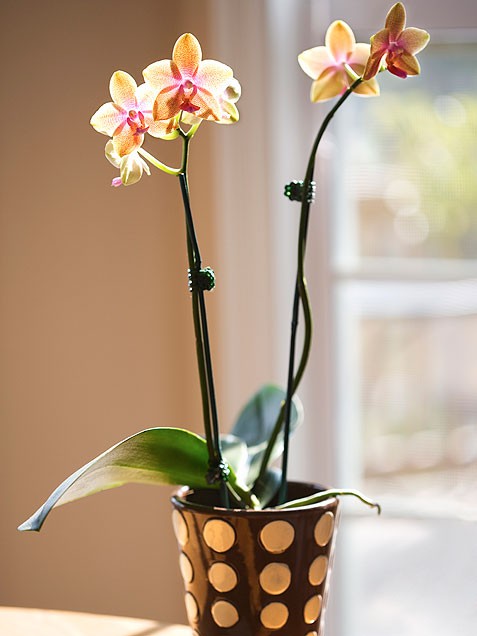
To encourage blooms to appear, give it indirect sunlight and place it in a freezing room – ideally -5 degrees Celsius - at night. Refrain from giving the moth orchid too much water. Once every couple of weeks is fine. However, the leaves should be misted about once a week.
 |
| Image by iVillage |
Taking care of the ming aralia means that it is kept moist and warm. Give it bright, indirect sunlight and water it often. The water should reach a few inches below the soil to ensure that it gets to the root system. In addition, mist the leaves to increase humidity.
 |
| Image by iVillage |
Wondering why the sharp, cutting leaves earned this plant its name? You should meet my mother-in-law. Water the plant once every two months. The mother-in-law’s tongue can even thrive in the shade.
 |
| Image by iVillage |
The maintenance of this good luck plant involves misting the leaves and keeping the roots moist. It prefers warmer temperatures, but make sure to keep it out of direct sunlight. In the spring, give your peace lily a new home by repotting it.
 |
| Image by iVillage |
Water your philodendrons generously and give it a dose of fertilizer fairly regularly. Just like how your face needs a good moisturiser in the winter, give the philodendron more water during winter to keep it from going dry.
 |
| Image by iVillage |
Sunlight enhances the patterns on the leaves of the polka dot plant, so give it a lot of direct sunlight. Water regularly to keep the soil moist and mist the leaves. This plant loves humidity.
The polka dot plant needs to be given a new pot every spring.
 |
| Image by iVillage |
My three favourite herbs are also three of the easiest plants to keep indoors. Water them regularly and place them on a sunny part of the room and watch them thrive. Your kitchen will never lack flavour for dishes again.
 |
| Image by iVillage |
Spider plants are like rabbits – they reproduce fairly quickly. It is one of those plants that are just begging to be propagated. One of the major issues that spider plants encounter is the browning of the tips of its leaves. Avoid this by using distilled water when watering the plant.
 |
| Image by iVillage |
I once had a succulent that I forgot about. As a testament to its hardiness, it was still alive when I encountered it weeks later. As long as the succulent gets enough sunlight and is watered every two months or so, the succulent should be fine.
 |
| Image by iVillage |
Keep
the plant in a part of the room that receives bright, indirect
sunlight. It should only be watered when the soil is dried out
completely.
 |
| Image by iVillage |
The zebra plant should be well-watered and misted regularly. It also hates the cold so make sure that the temperature does not drop below 15 degrees Celsius.
Subscribe to:
Posts (Atom)